Utah Lets Nolla Health AI Write Acne Prescriptions
Utah has launched a pilot program allowing Nolla Health's AI to issue initial acne prescriptions, marking a major shift toward autonomous medical treatment with phased human oversight.
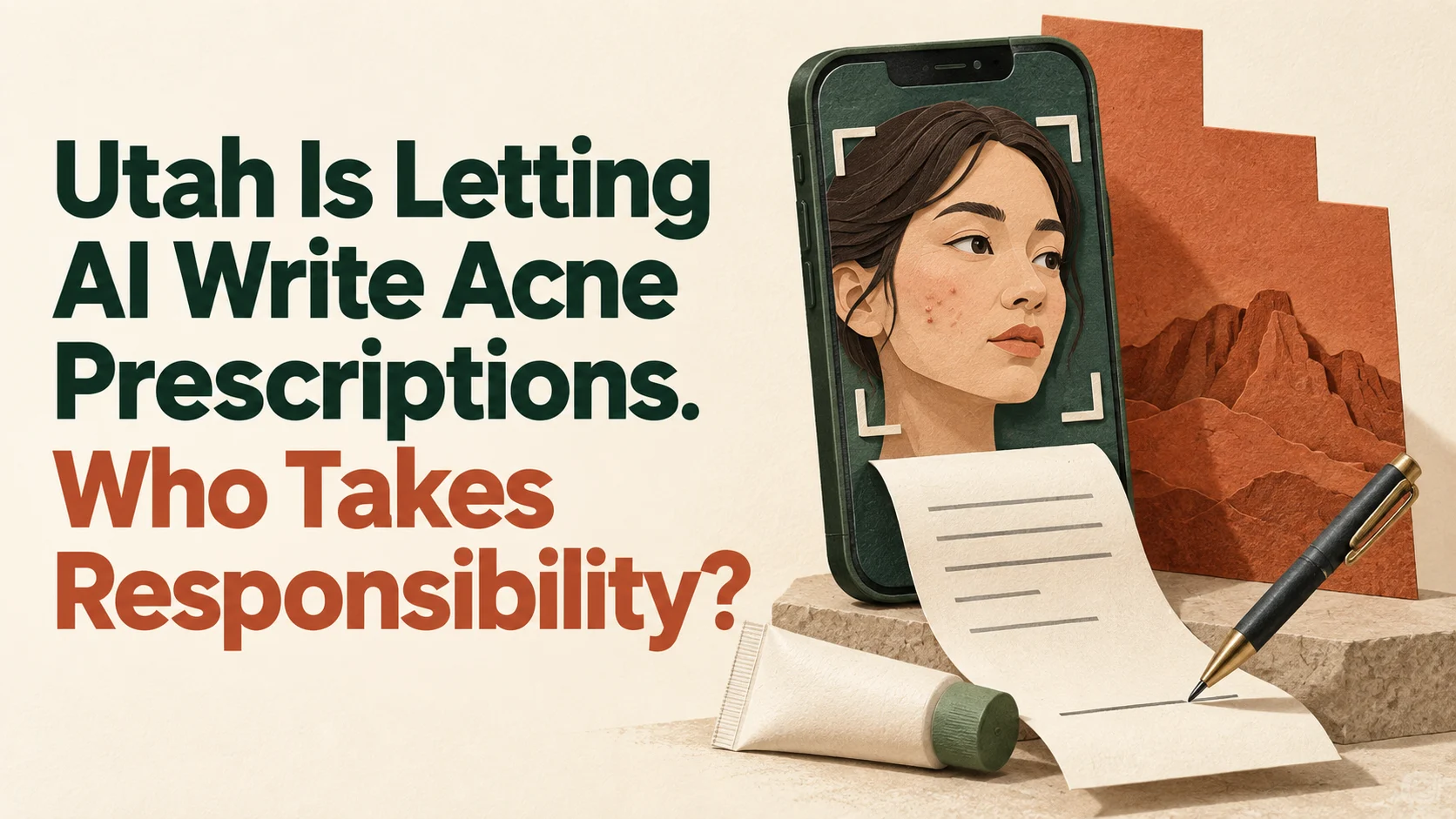
Under a new pilot program announced on October 5, Utah is permitting Nolla Health to use its AI software to assess mild to moderate acne and initiate prescriptions for adult patients. Users scan their faces and input medical histories into the app, which generates a severity score and selects from eight permitted topical treatments. This trial marks a significant step beyond Utah's previous Doctronic pilot, which only handled medication renewals, by allowing an algorithm to write initial prescriptions.
To ensure safety, the state has mandated a strict, phased oversight process. The first phase requires at least 100 patients over a minimum of four weeks, during which two independent Utah physicians must review every prescription before it is submitted. The second phase expands to at least 500 cumulative patients over eight weeks, shifting to retrospective weekly reviews. The final phase allows monthly sampling of at least 10 percent of prescriptions. Nolla claims that clinicians agree with its AI recommendations in more than 96 percent of real-world cases, though American Medical Association CEO John Whyte has expressed skepticism about autonomous systems meeting clinical standards.
Nolla is positioning the service as a low-cost alternative to traditional dermatology visits, which typically cost between $150 and $300. The app subscription starts at $4.99 a month, with compounded medications costing about $50 a month. Crucially, Utah's regulatory sandbox requires Nolla to carry malpractice insurance covering AI-generated prescriptions and prohibits the company from using terms of service to disclaim liability for harm caused by the AI's outputs.
For healthcare practitioners and AI developers, this pilot provides a blueprint for deploying clinical AI in highly regulated environments. By focusing on a narrow medical niche, establishing clear boundaries for when the software must hand off to a human, and accepting legal liability, Nolla is demonstrating how autonomous systems might safely integrate into the healthcare system. If successful, the model could free up dermatologist capacity for complex cases while expanding patient access.
This is our own summary of reporting by The Neuron


