PyTorch Reveals Keynote Lineup for 2026 North America Event
The PyTorch Foundation has revealed its keynote lineup for the 2026 North America conference, highlighting industry shifts toward agentic workloads and multi-silicon hardware integration.
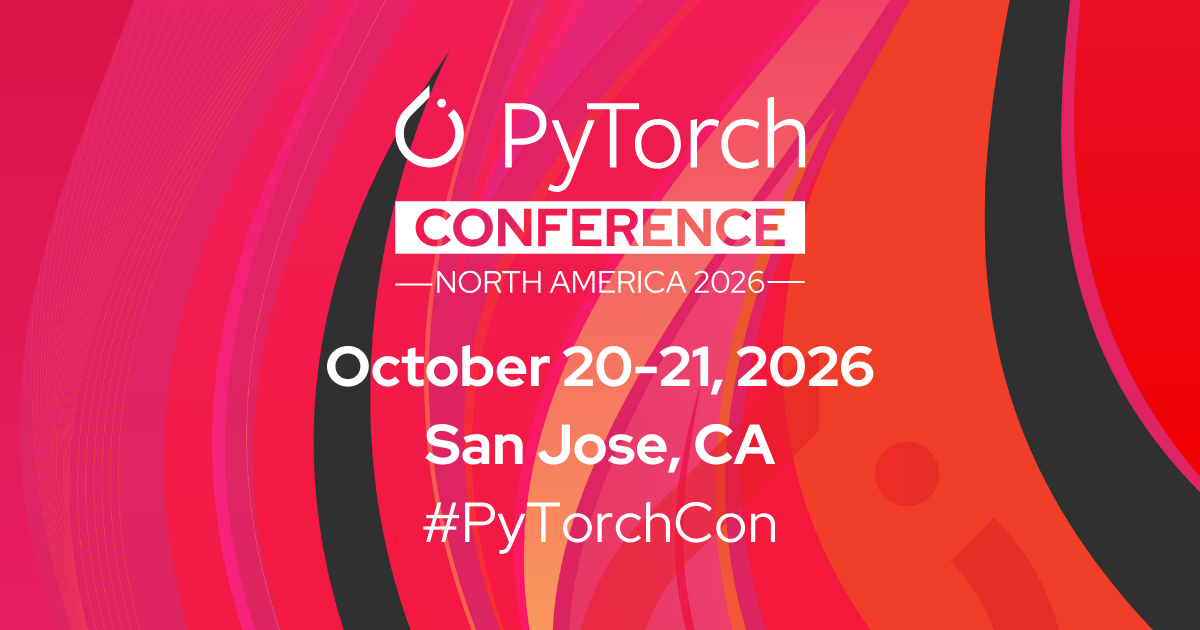
The PyTorch Foundation has announced the keynote speaker lineup for the upcoming PyTorch Conference North America 2026, scheduled to take place from October 20 to 21 in San Jose, California. This year's event will focus heavily on native hardware optimization, agentic workflows, and the expansion of open-science foundation models. Attendees will gain insights into how the framework is evolving to support diverse silicon architectures and complex AI agent deployments.
Key presentations will cover core framework updates and hardware integrations. Alban Desmaison and Edward Yang from Meta will deliver the PyTorch Updates address, while Jana van Greunen, also of Meta, will discuss transitioning internal workloads to a multi-silicon ecosystem. Hardware-specific sessions include Maen Suleiman of Amazon Web Services detailing Trainium's journey to native PyTorch, and Qualcomm's Chris Lattner presenting on advanced AI software. Google Cloud's Bill Jia will explore workload fungibility specifically tailored for the age of AI agents.
The speaker roster also features prominent industry figures addressing research and customization. Sara Hooker of Adaption will discuss adaptive intelligence, while Joelle Pineau of Cohere will speak on open science and foundation models. Other keynotes include Yiwei Song of Crusoe on model customization platforms, Mark Saroufim of Core Automation on linear algebra for research, and Mazin Gilbert from the Agentic AI Foundation. Industry leaders from NVIDIA, Red Hat, and Inferact—specifically Ujval Kapasi, Brian Stevens, and Simon Mo—will also deliver keynote addresses.
For machine learning practitioners, these sessions signal a concerted push toward making PyTorch highly adaptable across competing hardware platforms. As the industry shifts away from proprietary lock-ins, the focus on native Trainium support and multi-silicon ecosystems means developers can expect more seamless model deployment and lower compute costs. Furthermore, the emphasis on agentic workloads and customization platforms indicates that the framework is actively adapting to support the next generation of autonomous AI systems.
This is our own summary of reporting by PyTorch Blog