Microsoft Details New Azure Content Understanding Tools
Microsoft has clarified how developers should choose between Azure Document Intelligence and Azure Content Understanding, introducing new generative features for unstructured data.
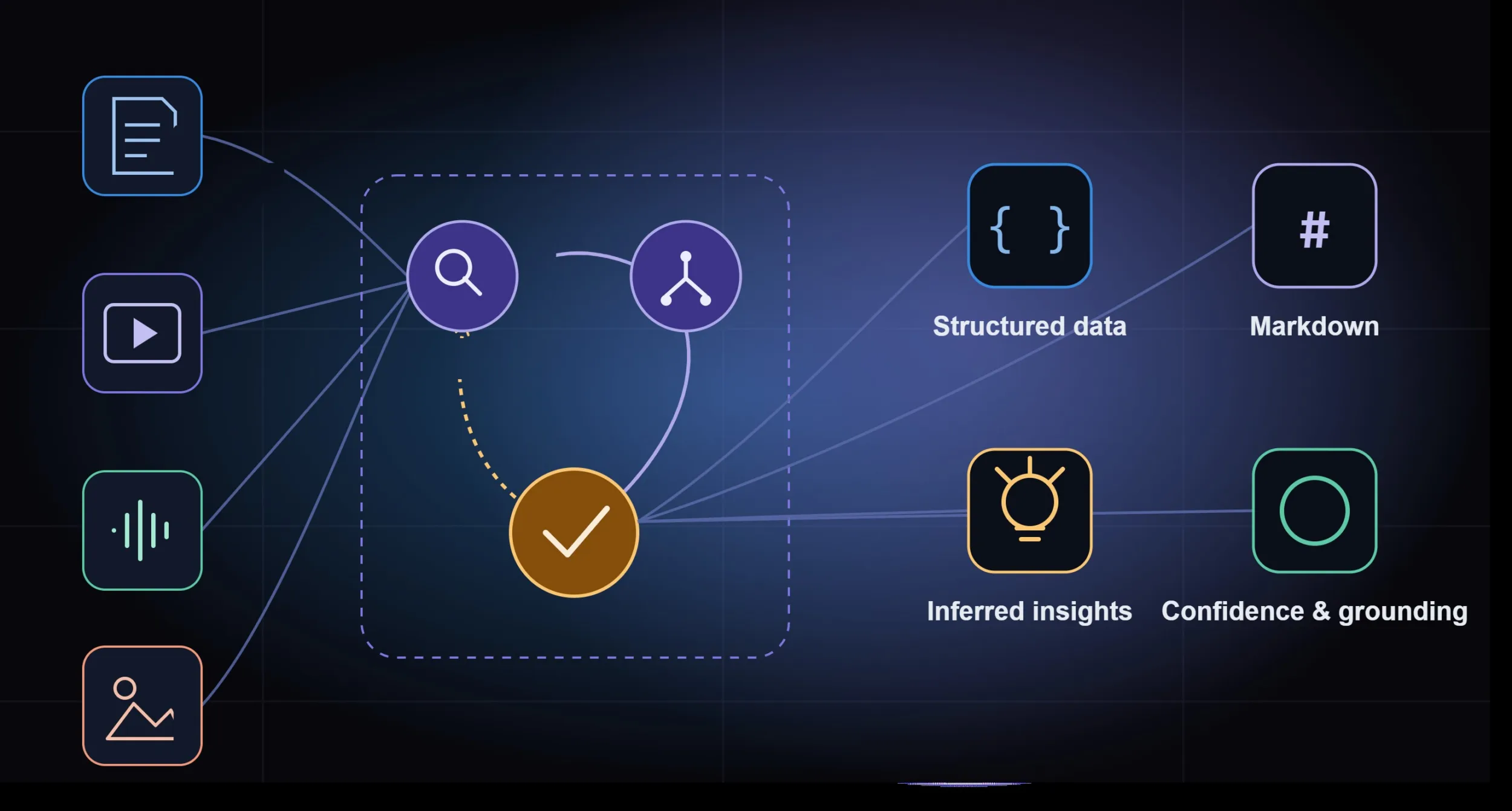
Microsoft has released new architectural guidance and preview features to help developers navigate its document-processing portfolio, specifically distinguishing between Azure Document Intelligence and the newer Azure Content Understanding. While both services share foundational optical character recognition and layout analysis capabilities, they target different workloads. Azure Document Intelligence relies on specialized, purpose-trained models to extract fields from highly structured forms. In contrast, Azure Content Understanding uses generative AI to process unstructured, high-variation documents without requiring upfront labeling.
The tech giant is highlighting several new capabilities within the Content Understanding 2.0 preview. This includes advanced contextualization, which learns from a small set of labeled examples to optimize field extraction, and an agentic mode that employs an iterative reasoning loop for complex calculations and validation. For standard structured documents, developers can choose between Azure Document Intelligence prebuilt models or the ACU 2026-06-01-preview model. Microsoft notes that the newer Azure Content Understanding layout analyzers offer lower per-page pricing and richer structural output, such as structure-aware Markdown.
For practitioners, this distinction changes how document pipelines are architected. Instead of forcing unstructured prose or mixed-media files into rigid templates, developers can use Azure Content Understanding to handle images, audio, video, and multi-step reasoning. It also simplifies retrieval-augmented generation pipelines by outputting chunked data. However, Microsoft advises against migrating existing, successful Azure Document Intelligence workloads, as its specialized models remain highly cost-effective for stable layouts like tax forms or mortgage applications.
Real-world implementations demonstrate the value of a hybrid approach. Malaysian fintech firm FinHero utilizes both systems, deploying Azure Document Intelligence for standardized receipt formats and switching to Azure Content Understanding when processing complex, customized schemas that involve nested discounts or service charges. Ultimately, Microsoft recommends that developers prototype with representative production content in the Azure Content Understanding playground before writing integration code.
This is our own summary of reporting by Microsoft Agent Framework